
| Date: 07-16-2026 | |
| Number of Hours: 0 | |
| Manual Reference: Ch 23 |
In our last engine discussion, it was reassembled and had two runs to confirm a significant oil leak. This was very likely a twisted cylinder O ring. Hard to prove but the leak strongly suggested this.
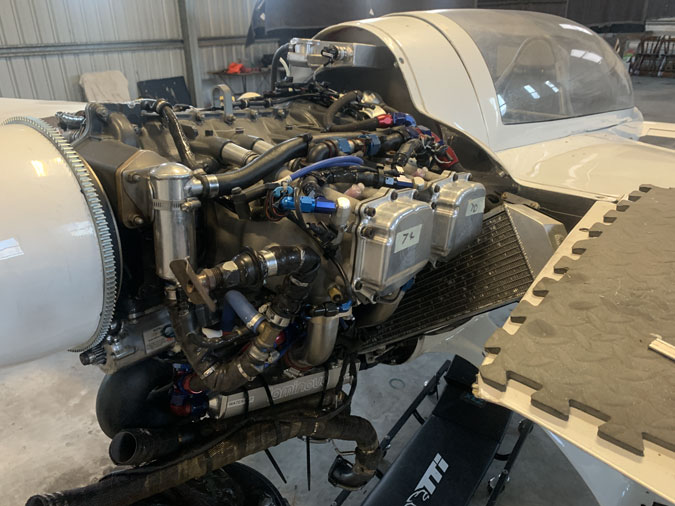
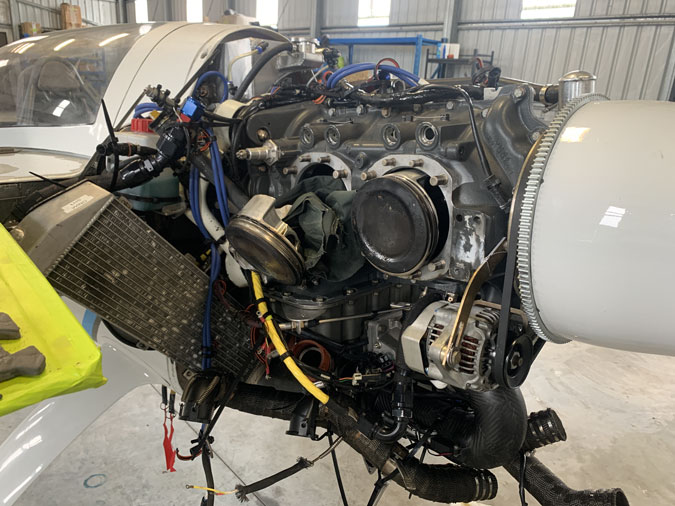
This time I didn’t have to take the engine completely out. Just a lot of things removed so that the cylinders could come off. Did I mention a LOT of things.
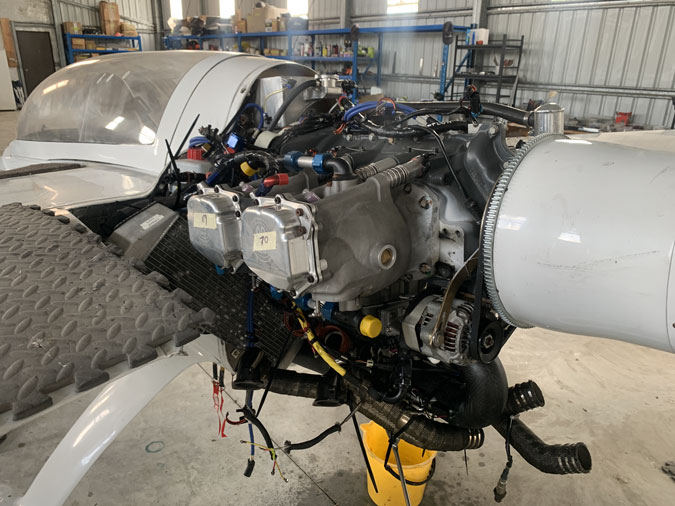
All the fluids of course were drained and as you can see there is now room to pull the cylinders. You can see in this shot just to the right centre of the back cylinder black marks where oil was escaping on that black accessory pad.
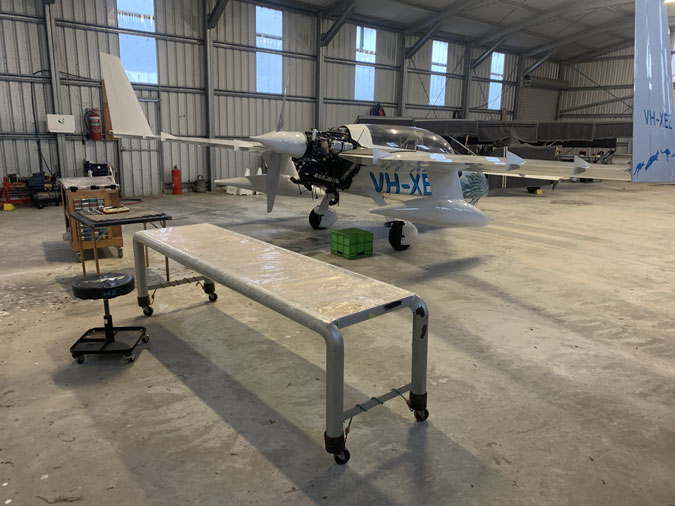
I was ready. This time the guys from the engine shop made the big drive to my hangar with a Ute full of toys. While it was a few days work to get ready that’s nothing like what is required to pull the engine out of the airframe and of course all the associated systems. July 16th 2026 was the day.
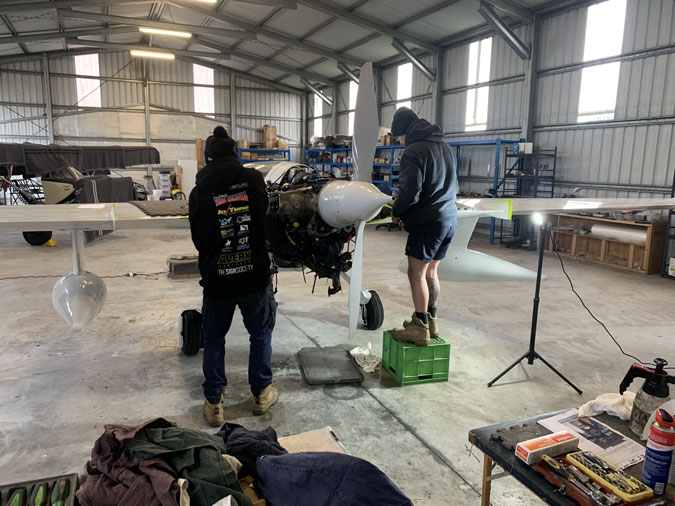
They arrived around 9am and were gone a bit before 3pm.
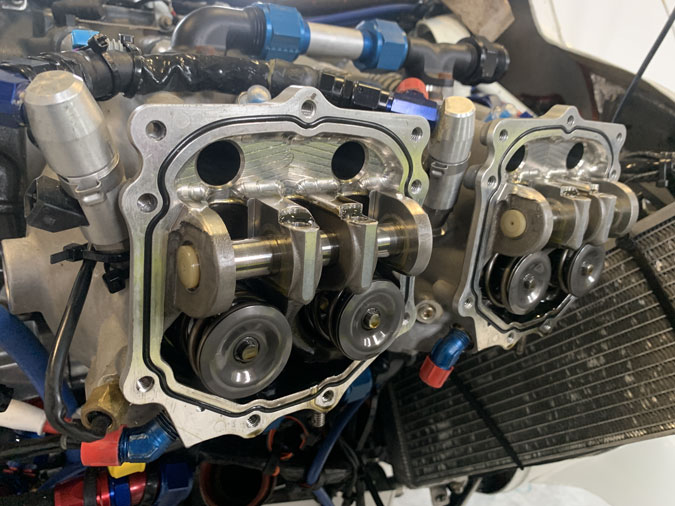
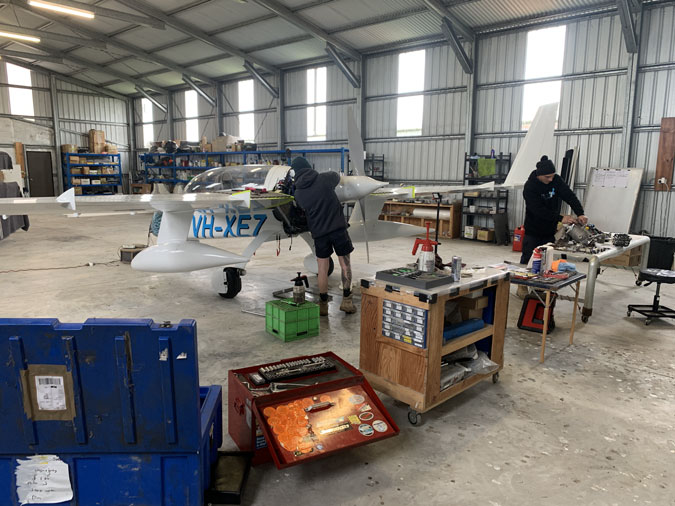
These guys have rebuilt a lot of engines as a full time job. Before this they had a long discussion with Andrew, the designer of this engine and I’m sure that helped a lot with the process. This is not you usual lycoming.
As you can see clearly the cylinders are in banks of two. It makes it tricky to get on and off. Those orange rubber bands, or really just one of them was probably the source of the problem. The size of those cylinder base O rings is the same as a Lycoming IO-580.
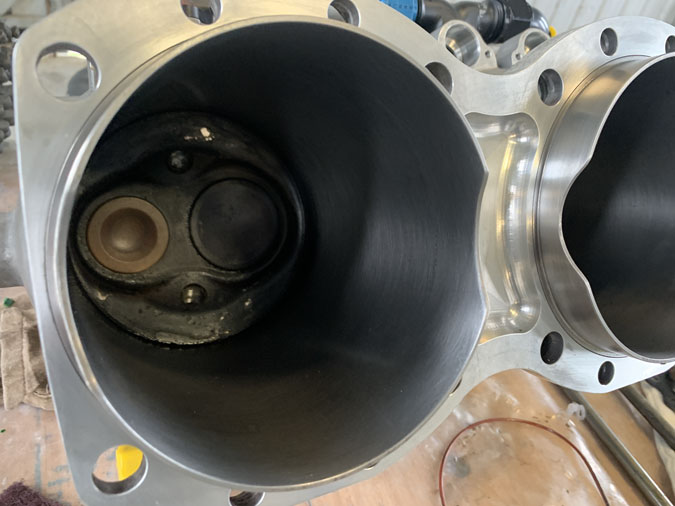
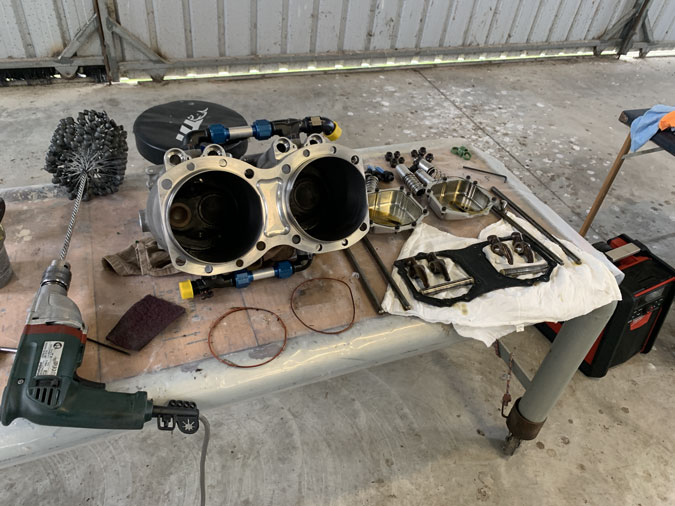
This is one side after a bit of a cleanup.
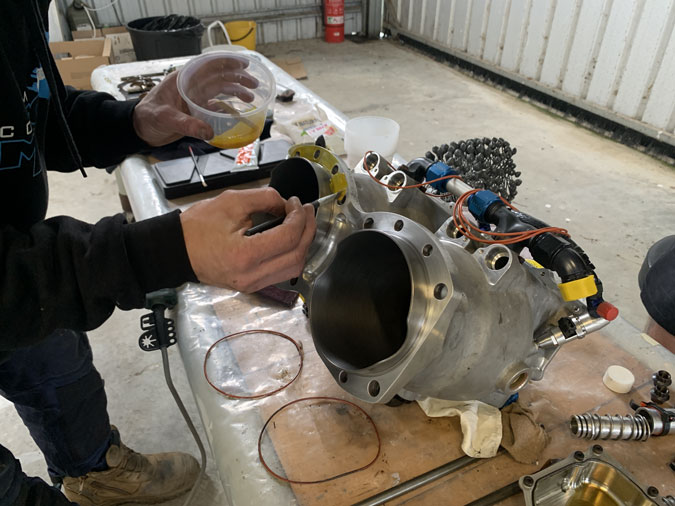
A really big thing is that the aluminium gaskets installed in this engine were NOT a part of the design at all. We were told not to put them back.
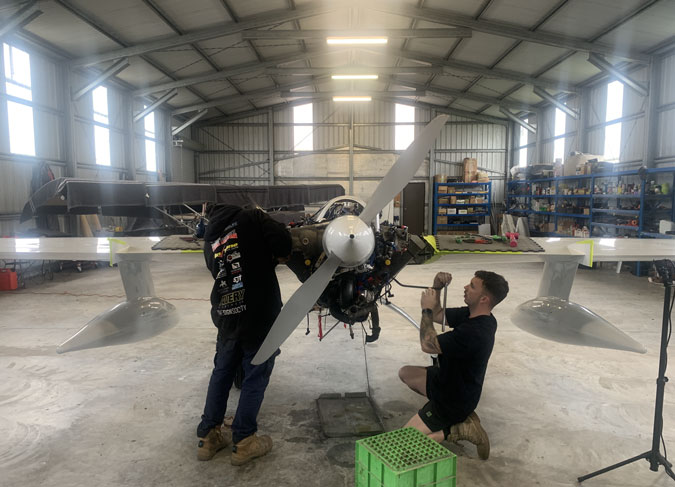
I will say these guys know how to work and exactly what to do. For something so critical experience matters with engines.
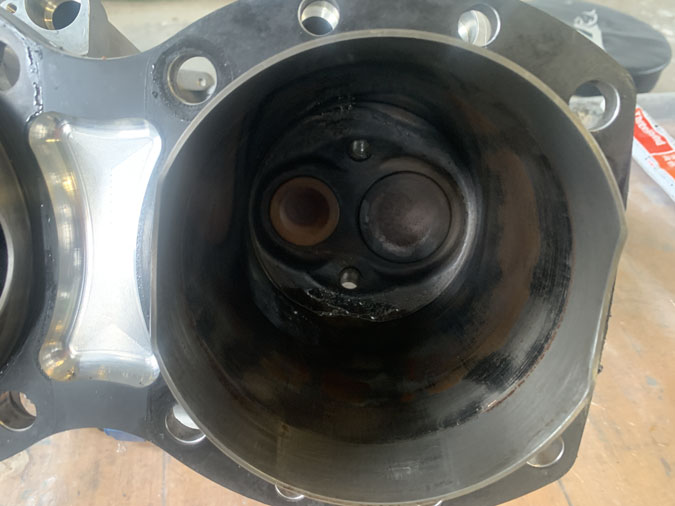
Before a clean up you can see rust forming again despite my preventative measures. These particular cylinders rust very easily without the oil that contains rust inhibitors.
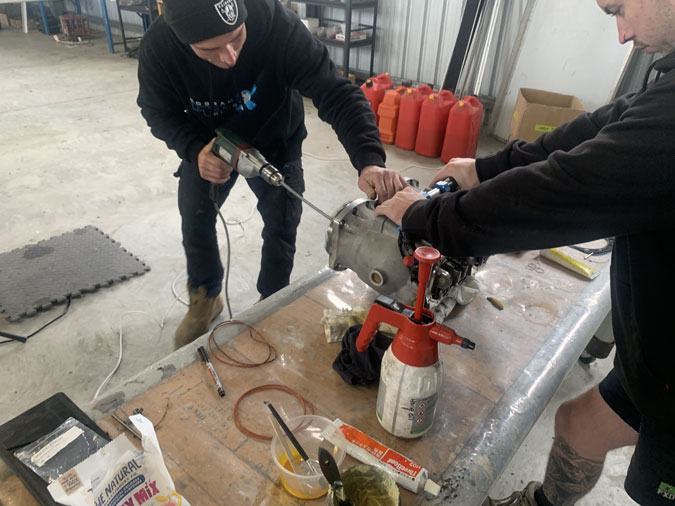
The cylinders had a very light hone with the stones just as a clean up. This side was done in 11 seconds.
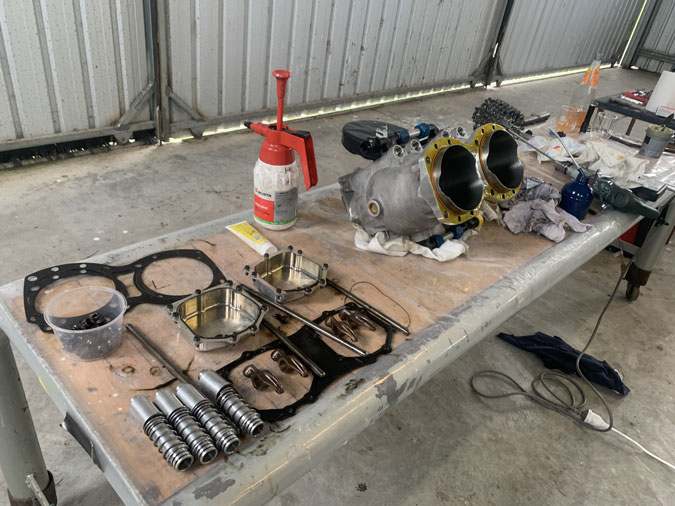
As things came off they were laid out neatly. You wouldn’t want to lose anything.
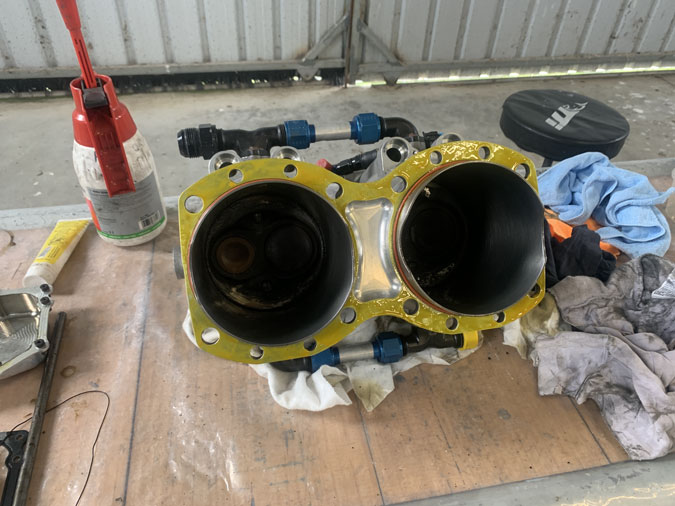
Instead of a cylinder base gasket, ThreeBond 1102 yellow is used. Another really big thing is that the correct torque values for the cylinder base nuts are 42ft-lb on the 1/2″ and 35ft-lb on the 3/8″ studs. The 1/2″ were previously tightened to 60ft lbs when the engine was first built. This is not correct. Consider that aluminium expands when hot more than steel so the clamping pressure will increase with operating temperatures. A normal lycoming has steel to steel here and 50ft lbs for the 1/2″ nuts. Interesting.
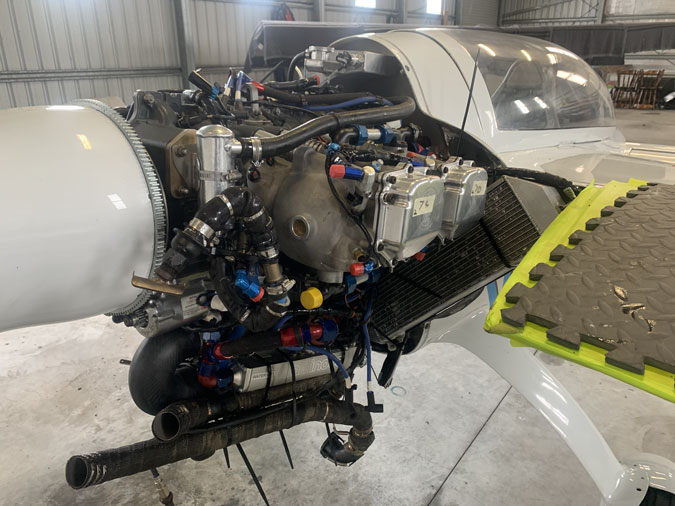
Its back together now. A few days work followed on my next trip. It is now full with 6 litres of W15W50 oil and Camguard.
It turned out that the cylinders were Plateau honed and didn’t need a run in. I could have gone straight to the 15W50 oil and Camguard. I probably would still have had a rust issue however given the ‘sweating’ but maybe not as badly. This whole episode has cost me over a year so far and it will be September 2026 before I ground run the engine again.